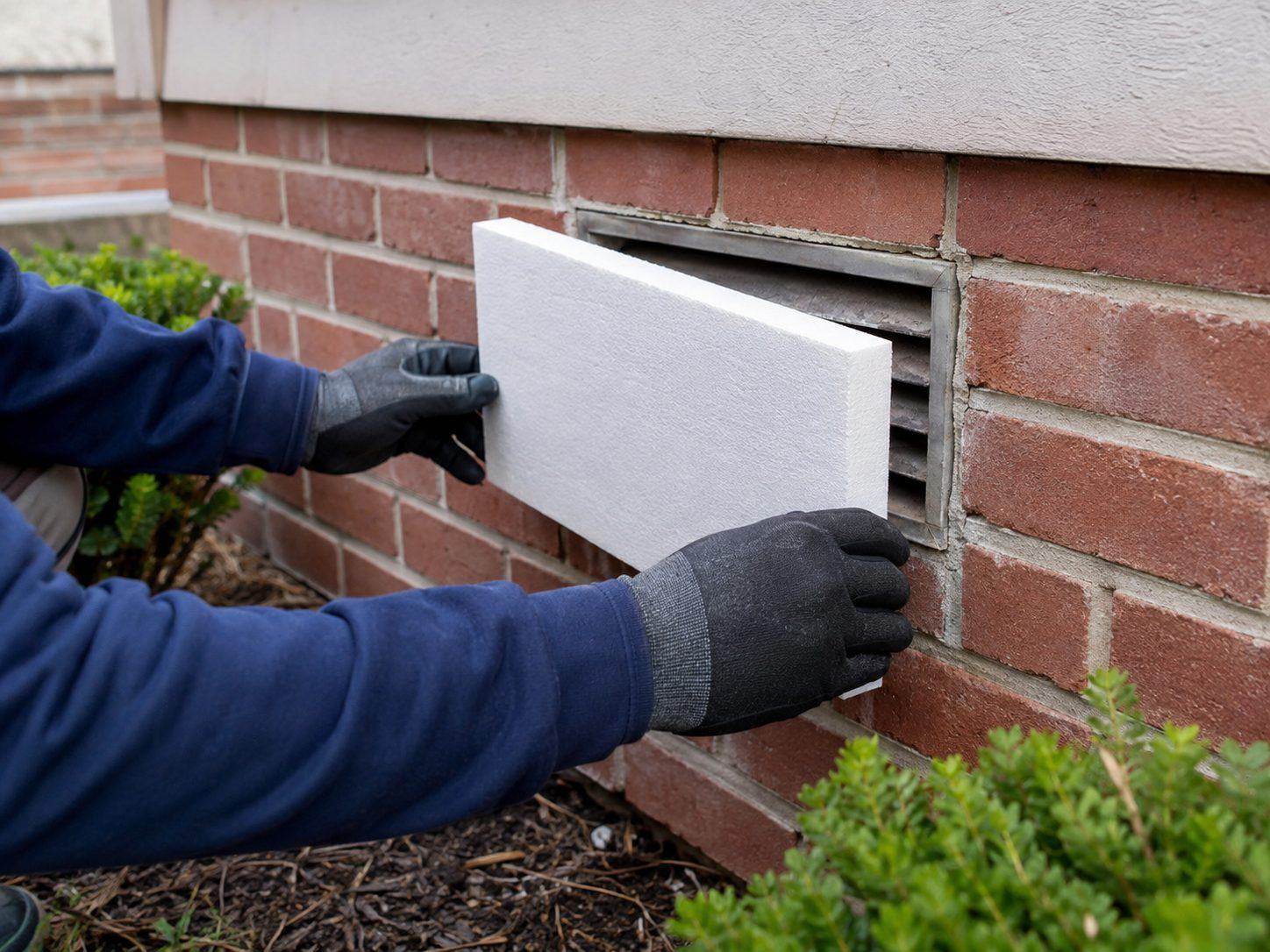
Crawl Space Vent Sealing in Richmond, VA
Open foundation vents were code for decades — but in a humid climate, they let in more moisture than they let out.
The Vent Assumption That Didn't Hold Up
Vented crawl space foundations were standard construction practice across Virginia well into the 1990s and 2000s, built on the theory that outside air flowing through the space would keep it dry. In a climate like Richmond's, the opposite tends to happen: warm, humid outside air enters the vents and condenses on cooler surfaces inside — the framing, ductwork, and subfloor — which is exactly the moisture source that leads to mold and rot.
Sealing those vents is a straightforward but important step in encapsulation. Once the crawl space is sealed and, ideally, conditioned with a dehumidifier, the vents that were meant to help are actively working against you.
What's Included
- Rigid foam or manufactured vent covers, fitted and sealed at each foundation vent
- Confirming no other unsealed openings remain (utility penetrations, gaps around pipes, etc.)
- Coordination with local code — some jurisdictions require a conditioned crawl space or mechanical ventilation once vents are sealed, which your inspection will account for
A Small Piece of a Bigger System
Vent sealing on its own is inexpensive relative to the rest of an encapsulation project, but skipping it undermines everything else — a fully vapor-barriered, dehumidified crawl space with open vents is still letting humid air pour in. It's almost always bundled with the rest of the system rather than done in isolation.
Often Paired With
Vent Sealing FAQ
Building codes have shifted to recognize sealed, conditioned crawl spaces as an accepted alternative to vented ones, but specifics can vary by jurisdiction. A local inspection will account for what's required in your specific area.
Not when it's done as part of a full system — the vapor barrier removes the ground moisture source, and a dehumidifier (where installed) actively manages any remaining humidity. Sealing vents without those other pieces isn't the recommended approach.
It's one of the more DIY-accessible pieces of encapsulation, but it should be done alongside — not instead of — a vapor barrier and moisture plan, or it won't solve the underlying problem.
Ready to Find Out What Your Crawl Space Needs?
A free, in-person inspection is the only way to know exactly what your crawl space needs — and what it'll cost. No pressure, no obligation.
Request a Free Inspection
No pressure, no obligation. We'll review what you tell us and get back to you with next steps.
Request received.
Thanks — your inspection request has been sent. A local specialist will follow up with you shortly to schedule your free, no-obligation inspection.